[11]
ARCHITEKTON GDA — MODULE RENTAL WEBSITE
▒ TIER C · YEAR 2026 · STATUS: WIP · LANGUAGES: JAVASCRIPT
A map interface and a database-free CMS, delivered design-first
[FIG. 1] MISSION
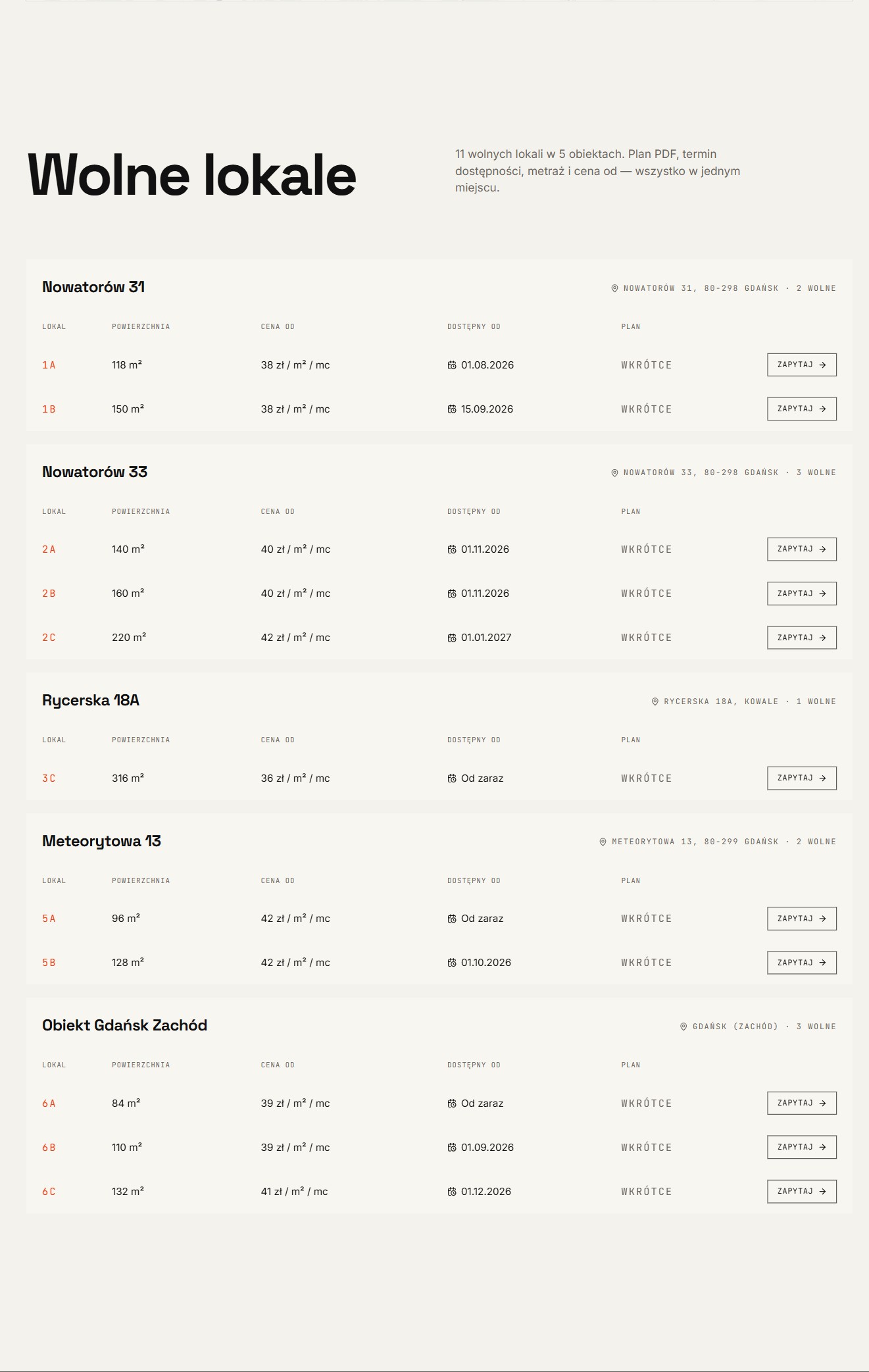
I design map interfaces (Leaflet) that answer one concrete user question instead of being a business-card leaflet. architekton GDA has rented compact storage-and-office modules in the Tricity area since 1995, and its web presence never told a tenant the only thing they care about: what is available and where. The core of the site I built is an interactive location map: numbered property pins, business-card popups with the number of vacant units and a Google Maps directions link, schematic polylines of the S6/S7/A1 arteries. Next to the map lives a table of vacant units — floor area, price from, availability date, PDF floor plan — and every number (per-property availability, occupancy %, total m²) is computed by a single withDerived() function from a single data file, so the hero, spotlight and table never drift apart. I build a lightweight database-free CMS here, because the scale doesn't call for one: JSON is the source, and the owner gets a password-protected /admin panel to edit properties, units and stats without touching code. I work design-first: the final composition — dark hero, diagonal bands, a spotlight with count-up stats — took seven layout versions reviewed on screenshots before the decision was made.
[FIG. 2] ARCHITECTURE
[FIG. 3] CHALLENGES
[+][CH-01]
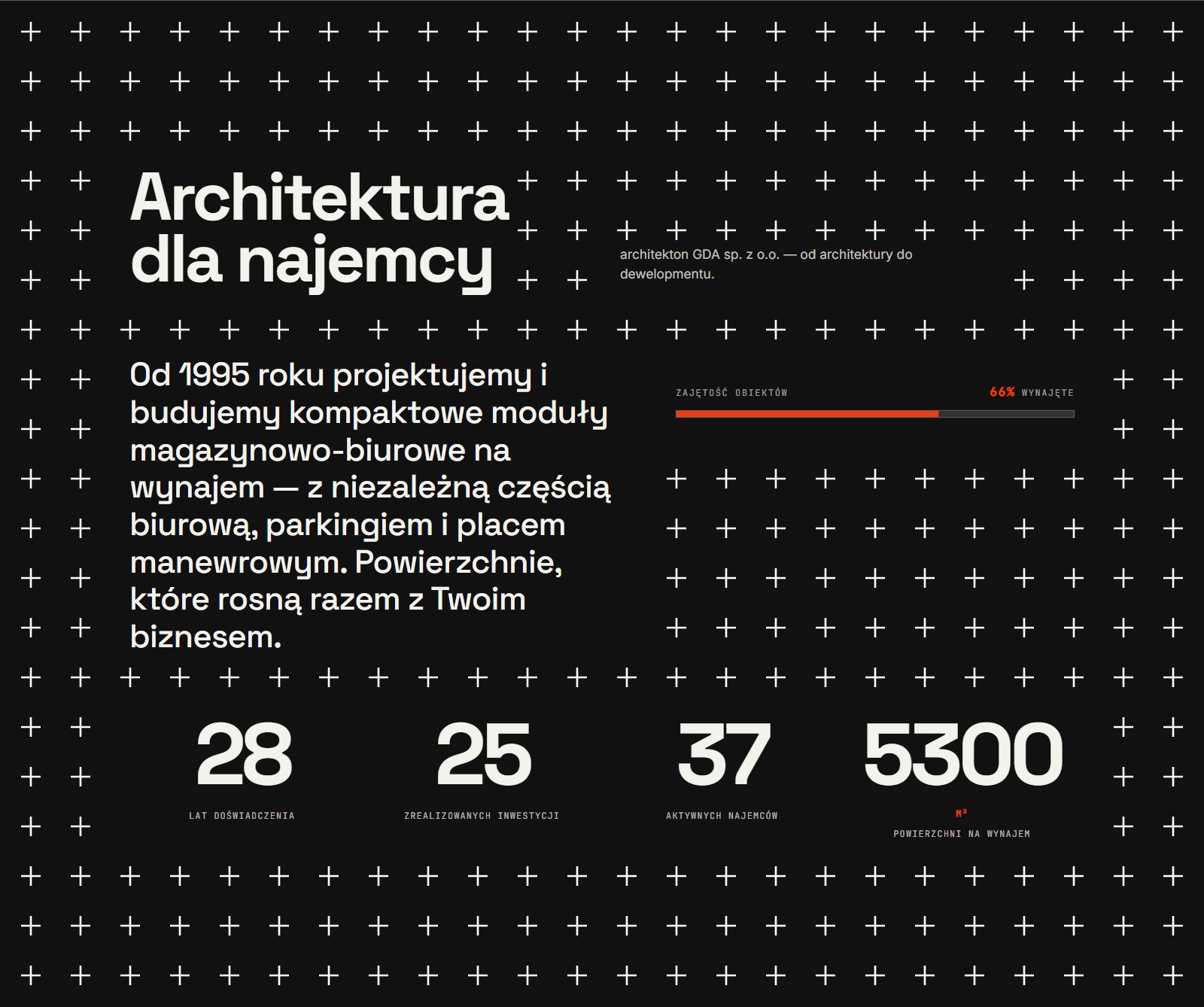
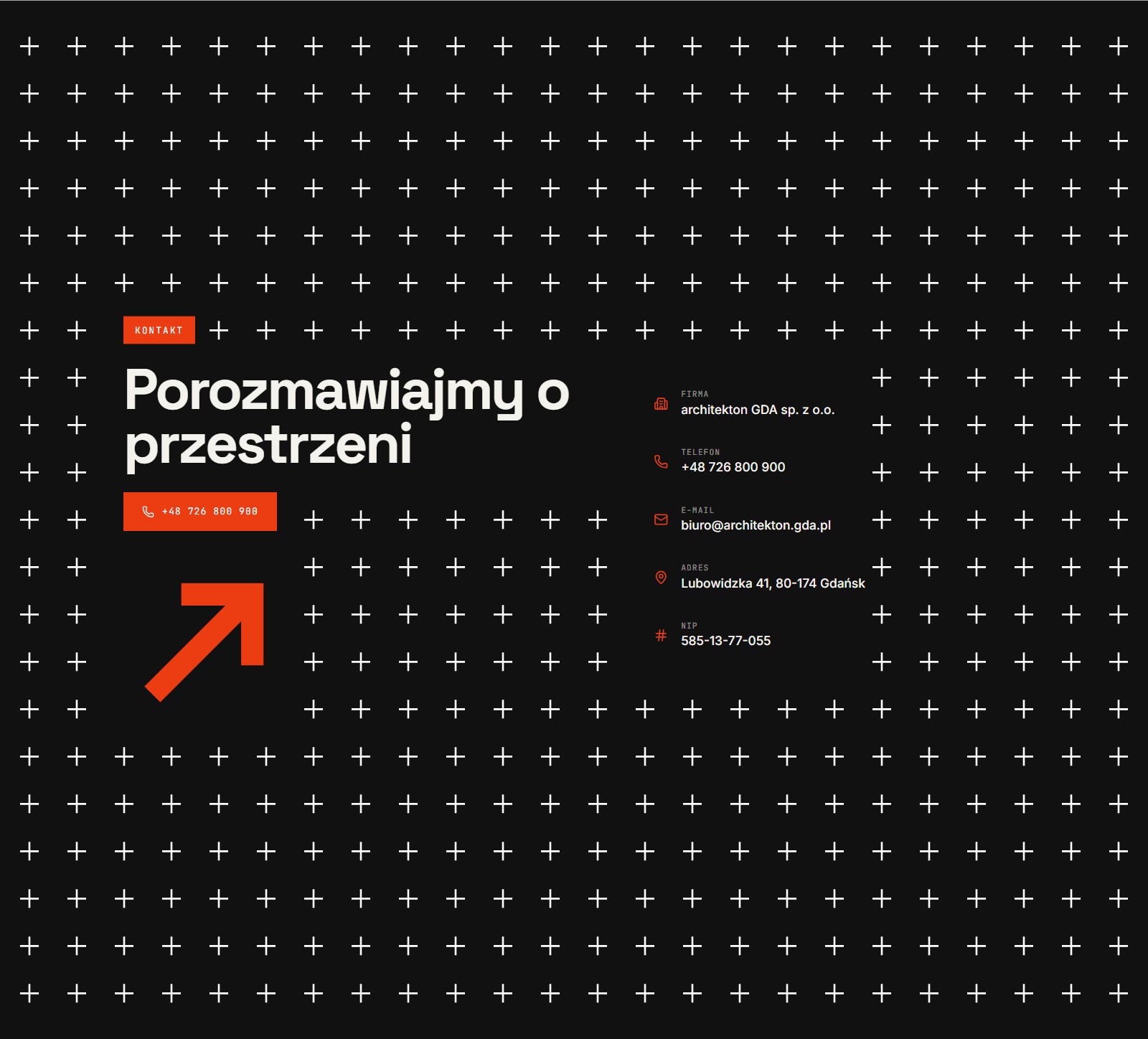
The decorative plus-field behind sections had one rule: no glyph may ever be cut by text. A plain background (CSS pattern, SVG) slices glyphs in half wherever a headline sits — ugly and illegible. I solved it with DOM geometry: PlusField renders pluses as grid cells and knocks out entire cells colliding with the bounding rectangles of text elements (getBoundingClientRect with a safety padding), and the grid recomputes on ResizeObserver and scroll, throttled through requestAnimationFrame. The measurement moment proved a separate trap: text rectangles are only trustworthy after webfonts settle, so the recomputation also fires delayed after layout stabilizes.
[+][CH-02]
Leaflet touches window at import time, and Next 14 renders components on the server — a static map import crashes SSR. So the map loads via next/dynamic with ssr:false and a placeholder in the map's background color, so hydration never jumps the layout. The real interactivity is a two-way landing↔map coupling: hovering a pin highlights the property card on the page, and selecting a property on the page opens its popup on the map — pins carry an occupancy state, the popup shows vacant-unit count and a directions link. Map centering averages the properties' coordinates; I know the limit of that shortcut (empty list → division by zero) and have the fix named.
[+][CH-03]
The CMS panel writes content and uploaded photos to disk — and Vercel's filesystem is read-only at runtime, so the write throws. Instead of hiding the constraint, the project owns it openly: readContent() gracefully falls back to the bundled seed (try/catch instead of a silent failure), production data comes from the committed content.json, and a comment in the upload code names the ceiling and the migration path to Vercel Blob. It's a conscious decision about the serverless execution model — the panel is fully functional on self-hosting, on Vercel it acts as a preview.
[+][CH-04]
Reaching the final composition took seven layout versions — each documented with a screenshot in the repo. The process worked like a design review with myself: version → Playwright screenshot → critique → next version. Whole directions died along the way (the brand orange as a gradient — rejected in favor of a flat #ec3d12 accent, never a gradient), and the palette froze into CSS tokens with rule-comments. The result: the site has a coherent system — one accent, two inks, texture only in chrome elements — instead of a collage of pretty sections.
[FIG. 4] AI LAYER
No model runs in the product — the map, table and CMS are fully deterministic. AI was the workshop, not an ingredient: the site was built entirely with Claude in a design-first regime — seven layout versions reviewed on Playwright MCP screenshots, project memory encoding decisions ('orange/black/white palette, texture only in the chrome'), and every deliberate shortcut in the code carries a comment naming its ceiling and upgrade path: single-password auth → NextAuth, disk upload → Vercel Blob.
[FIG. 4A] LAYOUT EVOLUTION — 7 VERSIONS
CLICK A VERSION — SAME SECTION, SUCCESSIVE TAKES (REVIEW ON SCREENSHOTS)
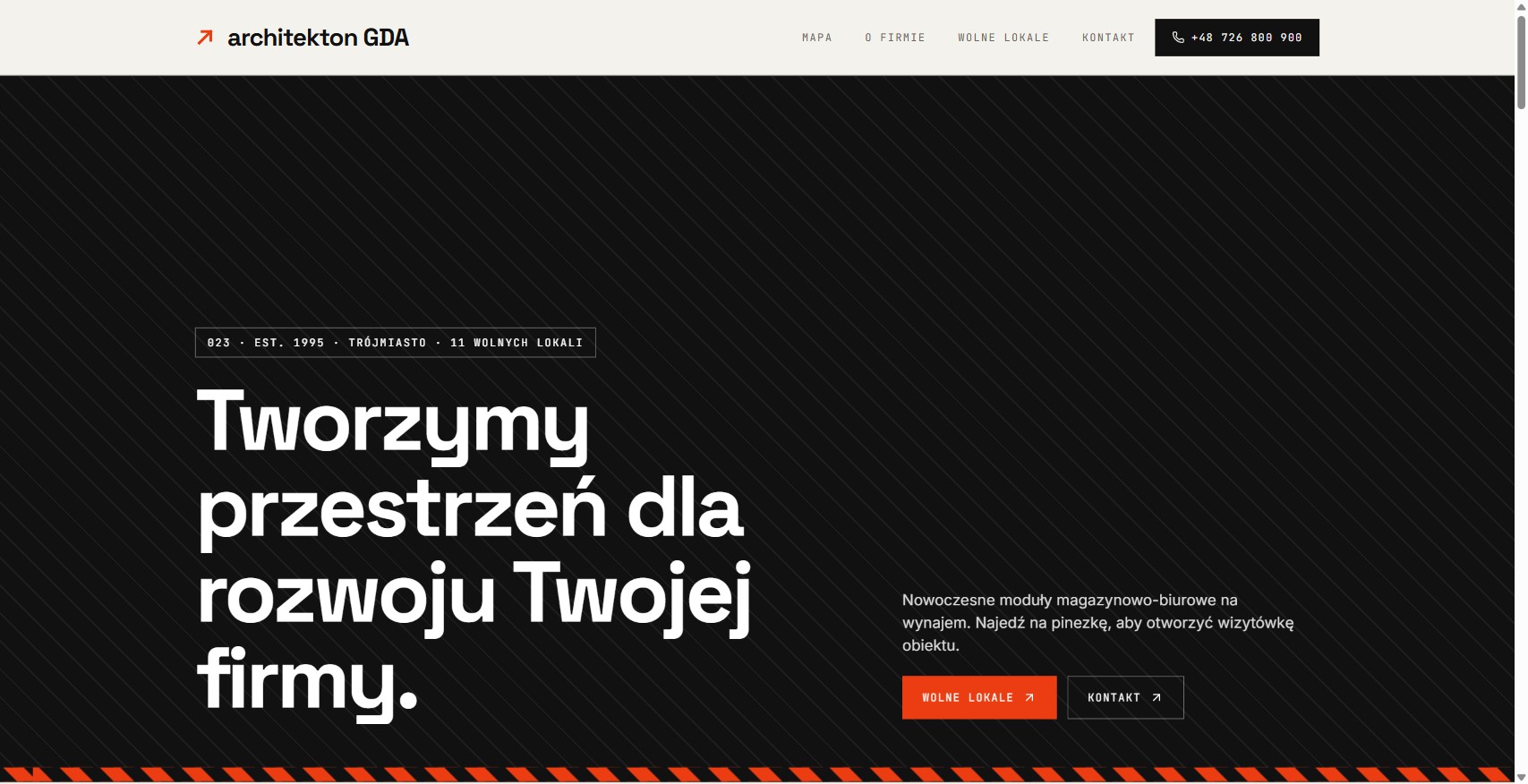
→ FINAL: dark hero, flat #ec3d12 accent (never a gradient), plus field knocked out under text
[FIG. 5] GALLERY